Tuesday, August 9, 2022

Courtiers by Valentine Low


Valentine Low, who covers the Royals for The Times, has a book coming out in late September.

Courtiers will be published by


Who advises the royal family, what influence do they have and how have they shaped history?


From Amazon:

Throughout history, the British monarchy has relied on its courtiers - the trusted advisers in the King or Queen's inner circle - to ensure its survival as a family, an ancient institution, and a pillar of the constitution.

Today, as ever, a vast team of people hidden from view steers the royal family's path between public duty and private life. The Queen, after a remarkable 70 years of service, is entering the final seasons of her reign without her husband Philip to guide her. Meanwhile, Charles seeks to define what his future as King will be, with his court wielding ever greater influence as he plans for his imminent accession.

The question of who is entrusted to guide the royals has never been more vital, and yet the task those courtiers face has never been more challenging. With a cloud hanging over Prince Andrew as well as Harry and Meghan's departure from royal life, the complex relationship between modern courtiers and royal principals has been exposed to global scrutiny. William and Kate - equipped with a very 21st century approach to press and public relations - now hold the responsibility of making an ancient institution relevant for the decades to come.

Courtiers reveals an ever-changing system of complex characters, shifting values and ideas over what the future of the institution should be. This is the story of how the monarchy really works, at a pivotal moment in its history."


You do not need to live in the UK to order products from Amazon.co.uk


Friday, July 29, 2022

Kori Roff Lawrence's new book, Royal Weddings of the 1840s


From Amazon:


This book delves into the European royal weddings which took place from 1840 until 1849. This involves over a dozen royal houses from England and Russia to Spain, Austria and the various kingdoms of both a pre-unified Germany and a pre-unified Italy."


Monday, July 18, 2022

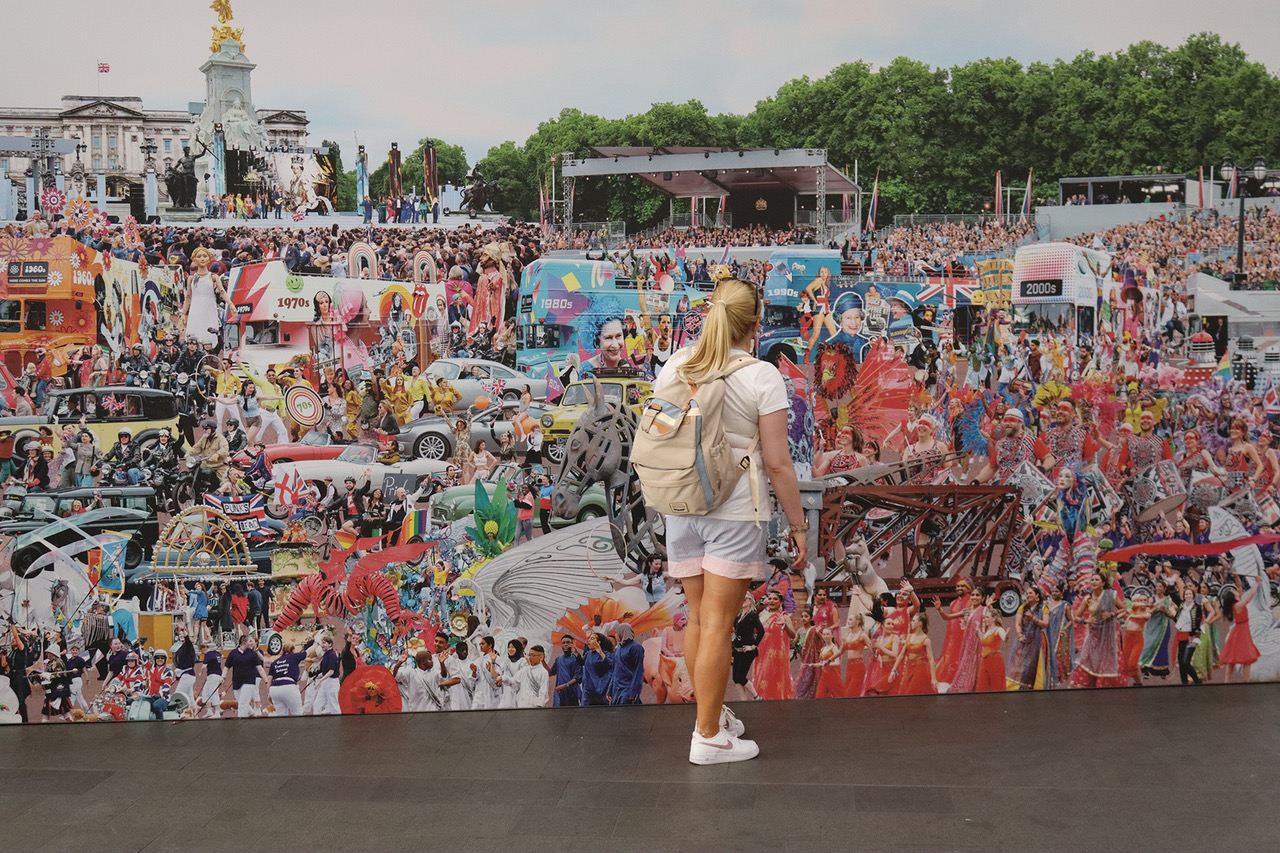
The Platinum Jubilee Pageant photo exhibit


@Harry Reichhold.  


The Platinum Jubilee Pageant

An extraordinary new photographic exhibition at London Bridge Railway Station 

By Henry Reichhold

A vibrant and colourful photographic exhibition has just opened at London Bridge Railway Station, celebrating the spectacular Platinum Jubilee Pageant.

Photographer Henry Reichhold has created two huge collages from over 800 images - the artworks showcase the huge range of events that made up the Pageant and capture the excitement of the day in exquisite detail and bold bright colours. 


Explore the images and discover the big events such as the Royal Family on the balcony, and singer Ed Sheeran on stage, or look deeper to uncover the many narratives that make up the artwork that tells the whole story. The exhibition can be seen at London Bridge Station Tooley St Overground exit, and will run until the 31st of August. 


all photos @Henry Reichhold 


Please contact

Henry Reichhold for further details on henry@reichholdarts.com or 07852 192371. 

A short film accompanying the exhibition can be viewed here:

 https://www.youtube.com/watch?v=efDcuaJjt50

Monday, July 11, 2022

A History of Royal Jubilees by June Woolerton


June Woolerton has written a timely book,  A History of British Royal Jubilees  (Pen & Sword), focusing on the jubilees of King George III, Queen Victoria (the first to have a Diamond Jubilee), King George V, and Queen Elizabeth II.

At Royal Central.  June is known as Lydia Starbuck.

https://royalcentral.co.uk/features/why-didnt-queen-victoria-have-a-silver-jubilee-178846/

This book is available now in the UK. It will be available for US readers in October.


Saturday, June 25, 2022

Ena and Bee


Ana de Sagrera's excellent biography, Ena y Bee is now available in English,   It has been published by Fonthill.


Sunday, May 29, 2022

A Romanov Roundup: the letters of Anastasia and Alexei


As it turned out,  Grand Duchess Anastasia was the boldest of the four daughters of Nicholas II and Alexandra.  She was a young woman, filled with compassion and perspective, who "had no tolerance for pretension.  "  Anastasia was only 17 years old when she was murdered with her parents, siblings, and several loyal retainers on July 16/17, 1918.

Having already translated diaries and correspondence of the three older Grand Duchesses Olga, Tatiana, and Maria, Romanov historian  Helen Azar has turned to the writings of Anastasia Romanov The Tsar's Youngest Daughter Speaks through Her Writings (1907-1918).   The book was co-authored/translated by George Hawkins.

This 415-page book includes correspondence between the young Grand Duchess and her parents, grandmother, Empress, Aunt Irene, Aunt Olga, friends, and teachers as she emerges from childhood to young woman.

Many of the letters are short letters that include birthday greetings, religious days, and, most important, the final year of Anastasia's life when she and her family were prisoners of the Bolsheviks


I am drawn to Aunt Irene's  (of Prussia) letter to Anastasia  (June 17, 1914) to offer birthday greetings, "fancy already 13".  Irene, Empress Alexandra's older sister, also wrote about the imperial family's recent visit to Livadia in the Crimea and to Constanta in Romania  Nicholas and Alexandra and their family visited the Romanian royal family, where Queen Marie was eager to arrange a marriage between her eldest son, Crown Prince Carol, and Nicholas' eldest daughter,  Romania.   

Empress Alexandra and Queen Marie were first cousins,  but Alexandra did not share her cousin's enthusiasm for the marriage. 

The letter was written 11 days before the assassination of Archduke Franz Ferdinand, heir presumptive to the Austro-Hungarian throne, which was the final match that led to the first world war.   

For Anastasia and her sisters and her younger brother, Alexei, who was a hemophiliac, their parents and tutors tried to maintain a semblance of pre-war life.  

Anastasia was at her happiest when corresponding with her father, even better when he would return from the front.  But there is little discussion of the war or the social upheaval outside the Palace.   In a letter written after Nicholas' abdication, Anastasia writes to her father:  "Well, my dear Papa darling. I'll finish now. I kiss you awfully firmly and love you! 1000. God be with you. All the best. Lovingly yours, your faithful and devoted Kaspyitz"  

The father-daughter love could not be constricted by imprisonment in Tobolsk and finally in Ekaterinburg.

George Hawkins is the editor/translator of  Alexei, Russia's Last Tsarevitch - Letters, diaries, and writings.  This nearly 700-page book opens with a brief introduction, followed by a chronology from 1904 until 1918.  The first entry is an excerpt from Nicholas II's diary, where he writes about the "unforgettably great day" when his son, Alexei was born.  

It is not until 1911 that Alexei's first written words appear.  The first chapters are diary excerpts and correspondence of Imperial family members writing about the young heir. Including other voices certainly helps the reader to understand Alexei.

He often wrote about illness (hemophilia), including the pain, but never truly complained.  Alexei was a young boy, who was determined to live a full life, even though he was under constant watch by his parents, his doctors, and the young soldiers who were his nurses-cum-playmates.

Kudos to Helen and George for the translations of Anastasia and Alexei's correspondence and diary entries.  But there are distinct problems with both books.  Publishing the letters in English is fantastic, but what is missing is the historical perspective and scholarship. 

Every chapter should begin with a text that informs readers about what happened during that year.  Tell the readers what the letters mean, the relationships, and the people mentioned in the letters and diaries. 

In other words: offer context.  Provide the historical perspective and scholarship that the letters and diaries demand.  

Where is the scholarship that these works deserve?  Both books were self-published through Amazon. I acknowledge that this is a good way to earn money.   But -- and this is a big but -- quality control is cast aside because the books were rushed into print.   This is a disservice to the material that both authors have translated.   University publishers, for example, invest time and money in their publications, making sure   Helen and George's books are far too important to be self-published   Neither had editors to guide them through the process of finalizing the manuscript before the book goes to press.

Publishers also have marketing and publicity departments, the latter of which sends ARCs to Library Journal Kirkus as well as book reviewers, historians, and others, people who can provide lucid and competent reviews of the subject matter.   The books also receive important cataloging information for libraries.   

Publishers also get books into bookstores and libraries, public and private.  But without the marketing and publicity, these books will receive minimal attention.

Most of the photos used in both books were supplied by GARF, the Russian archives.  The quality of the reproductions is not good, and many are too small to really appreciate. 

Both books include minimal footnotes, but the authors commit the cardinal sin of not including an index to names, places, subjects, and topics.  Seriously, an index is worth its weight in gold to researchers. 

This review is not a criticism of Helen and George's work. They have done a fabulous job in translating the correspondence from Russian to English.  My grumbles are toward the decision to not take the time to present their work to serious publishers who would be able to advise and release scholarly tomes that would reach a much wider market.   They need to put flesh on these letters.  

In other words, the historical and biographical of Who, What, Where, How, and Why.   

The authors have in their hands a historical treasure trove ... and both have the ability to produce a scholarly tome!


Monday, May 23, 2022

The Queen 70 Years of Majestic Style by Bethan Holt


When it comes to discussing fashion, Queen Elizabeth II rarely tops the list of the most stylish or best dressed royal, but as Bethan Holt points out in her new fabulous book,  The Queen, 70 Years of Majestic Style.  Elizabeth's style was"crystallized within hours of her accession to the throne."

The queen dresses to be seen and her style represents her role and who she is: "stoical and cautious, yet dazzling and majestic."  

Holt, who is the fashion and features editor at the Telegraph, is the perfect person to write this book.  She knows fashion and she understands the hows and whys of the Queen's clothes.  It is a stunning and fantastic book that gives readers more than a glimpse into the queen's evolving style after more than 70 years on the throne.

The book is divided into 12 chapters as Holt focuses on the different aspects of the queen's sartorial choices.   The first chapter "From Princess to Queen" is devoted to the queen's early years from childhood through her engagement and marriage, culminating with Elizabeth succeeding to the throne while she was on an official visit to Kenya.

Holt describes Elizabeth's sartorial transformation in the late 1950s as creating her "forever look.  Unlike her only daughter, Princess Anne, who embraced the mini-skirt, the queen later quipped that she was "right to not shorten my skirts," as hemlines once again edged below the knee.

Color and comfort, especially when going on tour, rather than succumbing to the latest fashion trends have always been more important to the Queen's style.  Holt quotes Angela Kelly who wrote: "A ten-day tour might involve 30 outfit options, allowing for changeable weather and unexpected circumstances along the way."   

Another chapter spotlights the Queen's year as many events are largely set in stone from the Trooping of the Colour,  Ascot, Summer at Balmoral, Christmas at Sandringham as well weddings, baptisms, funerals, and anniversaries.

Holt also offers insight into the queen's designers, her jewels, what she wears "off-duty," and her accessories.  The final chapter is titled The Queen as Muse.  Elizabeth has never been a fashion maven, unlike her aunt, Princess Marina, the Duchess of Kent nor her former granddaughter-in-law, Diana, Princess of Wales.  Designers fell over themselves to dress Marina and Diana as both exuded elegance in their clothing choices.

Queen Elizabeth II has never been a fashion icon,  However, Holt concludes her super book with The Queen as muse.   She is correct when she writes that the queen has never been a clothes horse.  Elizabeth knows her style, knows what she likes and what she needs to wear, but this soft style has appealed to numerous modern designers who have found a "treasure trove of inspiration.

Bethan Holt's book is an all-encompassing observation of Queen Elizabeth's "majestic style" that is to be applauded and appreciated.  It is a delightful and fascinating read, and, I might add, well-researched, as well.

 There are far more books on the Duchess of Cambridge's clothes, including Holt's The Duchess of Cambridge: A Decade of Modern Royal Style, so it is nice to see a well-written book on the Queen's style.   

The book includes an amazing torrent of photographs, black and white, and color.  

Just one quibble:  a bibliography of the sources Holt consulted would have made the book perfect, rather than practically perfect.

The Queen 70 Years of Majestic Style was published by Ryland, Peters & Small ($24.99/£18.99).